
Key Takeaways
- Perioperative Myocardial Injury (PMI) affects 10–20% of surgical patients, but 80% of these cases are "silent" and show no clinical symptoms or signs.
- Patients who develop PMI face a 30-day mortality rate that is 5 to 6 times higher than those who do not experience the injury.
- While high-sensitivity cardiac troponin T is a cornerstone for diagnosing acute myocardial infarction, it is increasingly recognized as a potent, independent predictor of long-term cardiovascular risk.
- Implementation requires a multidisciplinary team and interdisciplinary education to manage the protocol from pre-op through discharge.
This is a verbatim transcript of an interview conducted with Dr Prin Vathesatogkit (PV) and Dr Lisa Sangkum (LS) in October 2025. The transcript has been lightly edited for clarity.
Introduction
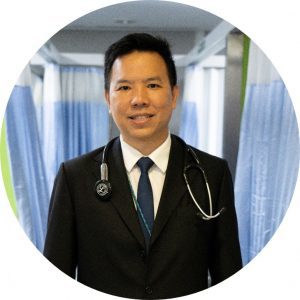
PV: Hello everyone,my name is Dr Prin Vathesatogkit, a cardiologist from Ramathibodi hospital, Bangkok, Thailand.
LS: Hello everyone, I am Dr Lisa Sangkum. I am an anesthesiologist from the Department of Anesthesia, Ramathibodi Hospital, Mahidol University.
What are the key unmet needs in cardiovascular management for surgical patients, particularly in the context of PMI?
PV: It’s long been said that when our patient has undergone the surgery, it’s like they are doing the exercise stress test. And in that case, Myocardial Infarction (MI) or Heart Failure (HF) can happen from time to time.
PMI stands for Perioperative Myocardial Injury. As you can see here, the Myocardial Injury is not necessarily the Myocardial Infarction (MI). So it’s more specific and more sensitive to detect the minor injury in our patient postoperative.
PMI or Perioperative Myocardial Injury can happen in about 10 to 20% of our patients undergoing operation. And from this, you have to know that 80% of the patients who have PMI do not have symptoms or signs. And whether they have or do not have symptoms or signs of MI, the mortality rate in those who got the PMI is higher than those who didn’t get the PMI. So this is the importance why we need to do the PMI screening in our patients.
How was the PMI protocol implemented in Ramathibodi?
PV: I think the first time we met was in the multidisciplinary hospital risk team, where they were celebrating that there was zero mortality in the past year. And since I am a cardiologist, and I see a lot of patients who have morbidity like MI and HF after the surgery, and we do many things to help them to survive. I raised my voice in that meeting that we do not just want to prevent the mortality from happening, but we also need to do the morbidity prevention too. And that’s when we talk about the PMI in that team.
LS: So in terms of pushing for the PMI Protocol, it came from both international guidelines from European and American society. And it’s also from our own experience, we missed the cases of silent myocardial injury. And this became a wake up call for us to gain strong support from our colleague.
PV: So it’s both the guideline and the case experience that bring us together.
LS: Yes, exactly.
How have patient outcomes improved since implementing the PMI protocol?
PV: After we do the PMI protocol, there are some questions from many colleagues about the benefit of doing the PMI protocol. I have to say that we are collecting the data whether in the end, we can improve our patient outcome or not. But for instance, you can see that if you do the PMI protocol, you can detect about 10% of our patients who had undergone the intermediate to high risk surgery, that can have the elevation of the high-sensitivity cardiac troponin T.
And in these patients, 80% of them have no symptoms. And the mortality rate at 30 days is about 5 to 6 times higher than those without a PMI. For me, I think, just having known who has got PMI or not is already beneficial to me and to our patients, that we can have closer monitoring on them and we can invite them to come in later to test whether they have hidden coronary artery disease.
What are some key learnings from implementing the protocol and what future areas of work do you foresee?
LS: Since cardiac biomarker screening is quite relatively new especially in the surgical setting. So there were some questions and some hesitation about its value. So to overcome this, we quite focus on interdisciplinary education, to explain the evidence and emphasising how early detection could improve the patient outcome.
PV: First thing you have to get someone who believes in it and to strongly push this thing to happen. If you look at the data, it’s not just in the European countries, we also have the data from North America, that showed that the perioperative biomarker is very important and can help us a lot to detect the abnormality that can happen in our patient.
LS: I think there are three main areas that we may need to focus more. Firstly, I think we need effective data collection. Secondly is the outcome tracking. And lastly is about ongoing research to refine the risk stratification and management strategies. I think regular audits such as tracking the incidence of PMI, 30 day morbidity and mortality, will help us to know more about the protocol impact and deepen continuous quality improvement.
And for the ongoing research, I think it is a must. It can help to build stronger evidence for the protocol and make it easier to get support for using it more widely across the country.
PV: Yeah, I totally agree. Because we should collect the data to present to others as well, so they can learn from us. Another important thing that I want to mention is about the learning curve on the screening of cardiac troponin. Because, as we said before, it’s a new thing in this area and many of the people still think that we are looking for the acute MI, which is not. High-sensitivity cardiac troponin T can be used as a screening tool as a risk predictor for the future event of cardiovascular disease. And that’s the point of the PMI that we are doing.
What is your advice for cardiologists who plan to adopt the PMI protocol?
PV: For me, it’s all started with care. We care for our patients. PMI helps in early detection and screening for hidden coronary artery disease in our patients. For colleagues who want to implement the PMI protocol in your hospital, I think it’s time for the PMI now because we have the guidelines. You can familiarise yourself with the PMI and also go out to educate your colleagues about that. You can also do the research by collecting the data in your clinical pathway in your hospital.
The most important thing is that you have to find a team like I did in Ramathibodi hospital. With a team, you can educate the full protocol from the beginning to the end, from the pre-operative period to the post-operative, and discharge the patient from the hospital.
LS: Thank you very much for watching.
PV/LS: Thank you (in Thai).
The views and opinions expressed by Dr Prin Vathesatogkit and Dr Lisa Sangkum are their own views and opinions. Roche disclaims all liability in relation to these views and opinions.
References
- Puelacher C, Lurati Buse G, Seeberger D, et al. Circulation 2018;137:1221–1232.
- Devereaux PJ, Sessler DI. N Engl J Med 2015;373:2258–2269.
- Puelacher C, et al. Eur Heart J 2022;00:1–12.
- Devereaux PJ, Xavier D, Pogue J, et al. Ann Intern Med 2011;154:523–528.
- Rubini-Gimenez M, et al. Eur Heart J 2014;35:2303–2311.
- Roffi M, et al. Eur Heart J 2016;37(3):267–315.
- Devereaux PJ, et al. JAMA 2017;317:1642–1651.
- Halvorsen S, et al. Eur Heart J 2022;43:3826–3924.
- Thompson A, et al. Circulation 2024;150:e351–e442.