


Key Takeaways
- hs -TnT rapid 0h/1h algorithm helps to rapidly rule out AMI
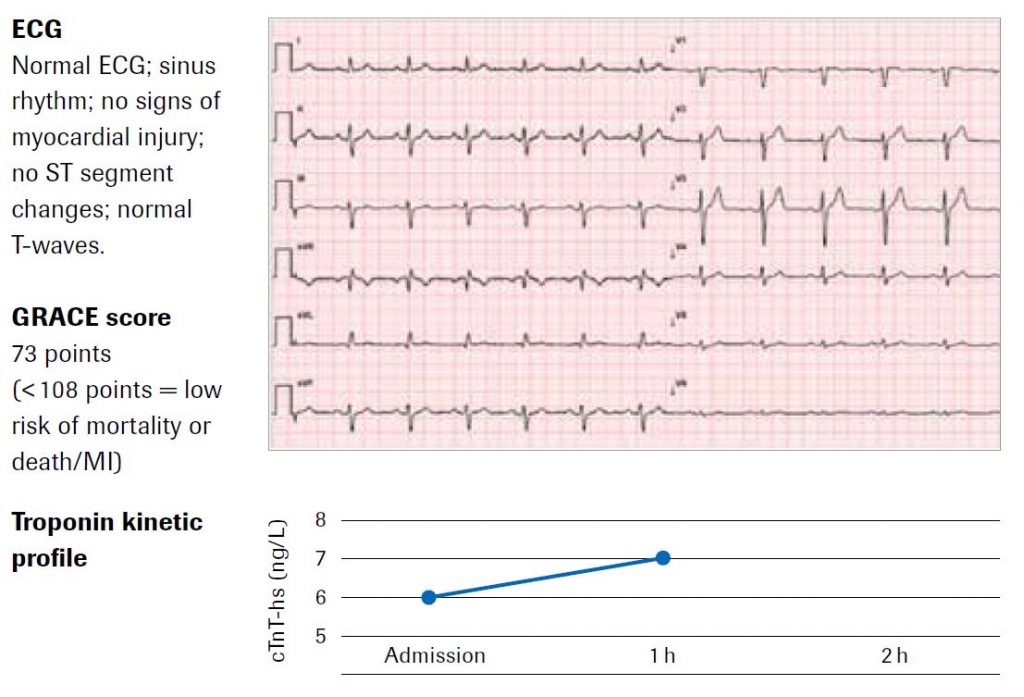
- Combining hs-TnT values with GRACE scores and ECG helps to predict a low risk of subsequent mortality
- Early rule out of AMI with hs-TnT 0h/1h algorithm helps to reduce the use of invasive angiography and reduce cost and health care resource utilization
Recommended procedure
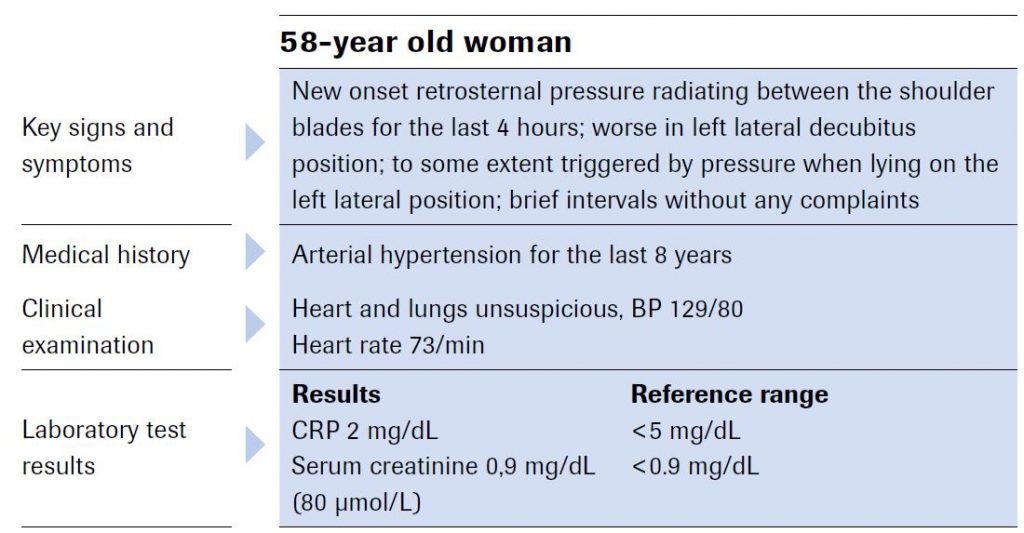
Risk stratification based on one of the established risk-scores e.g., GRACE 2.0 score (evidence level IB)
Differential diagnostic assessment by echocardiography (evidence level IC) and multi-slice CT-scan (evidence level IIaA): (musculoskeletal origin or unstable angina, etc.)
In patients without complaints no need for monitoring except in special situations, e.g., vasospastic angina (evidence level IIbC)
No indication for routine invasive coronary angiography, as long as the patient is without symptoms and does not present any risk parameters
Possible discharge and outpatient workup including stress testing (evidence level IA) and coronary CT-scan
Conclusion
According to the criteria of the 2015 ESC guidelines, using the 0/1-hour algorithm, NSTEMI can be ruled out (normal initial troponin level <12 ng/L with a rise <3 ng/L within 1 hour). Based on the ECG and GRACE score the risk is estimated to be low (<108 points). Outpatient workup to investigate the differential diagnosis and stress testing before or within a few days after discharge are recommended.
Author’s opinion
Whenever early diagnosis is required for rapid decision making, the 0/1-hour algorithm using cTnT-hs should be preferred to the standard 0/3-hours or 0/6-hours algorithms.
References
- Thygesen K, Mair J, Giannitsis E, et al. How to use high-sensitivity cardiac troponins in acute cardiac care. Eur Heart J 2012; 33:2252–7.
- Reichlin T, Hochholzer W, Bassetti S, et al. Early diagnosis of myocardial infarction with sensitive cardiac troponin assays. N Engl J Med 2009;361:858–67.